There’s a certain intimacy in stepping into a designer’s workspace. It’s never just about sketches or fabric samples scattered across the table—it’s about catching a glimpse of how ideas transform into objects we carry through our lives. When I visited Teva’s design studio, I expected efficiency, maybe a sleek tech-driven process. What I found instead was something warmer: tables marked with pencil lines, scraps of worn fabric, and a quiet obsession with making something that feels effortless for the person wearing it.
The first thing that struck me was how much of Teva’s identity is rooted in solving real problems. Back in the 1980s, the brand started with a simple challenge: how to create a sandal that wouldn’t float away in the river. From that moment, utility became inseparable from their DNA. Decades later, I could still see that spirit alive in the prototypes laid out in front of me. Some designs will never reach the public, but they speak volumes about the brand’s commitment. A pair with a reimagined strap system was sitting there—too experimental to launch, perhaps—but it told me that Teva never stops questioning how comfort and stability can be redefined.
I noticed how much care went into even the smallest detail. The designers weren’t just adjusting colors; they were debating the feel of a buckle, the angle of a strap, the flex of the sole when tested against uneven terrain. One explained that the goal wasn’t only to design for the urban explorer or the seasoned hiker but for the unpredictable ways real people live. A sandal might be worn for a market stroll, a festival, a sudden rainstorm, or a week-long road trip. That range of life experiences is woven into the choices they make on the worktable.
Among the prototypes, there was one pair that particularly caught my eye—an understated sandal with a muted, earthy webbing and a slightly thicker sole. It hadn’t been released yet, but it embodied the kind of simplicity that travelers and minimalists crave. Standing there, I thought about the countless times I had to pack light and choose one pair of shoes to take me everywhere. This was the kind of design that could answer that dilemma: versatile, durable, and quietly stylish.
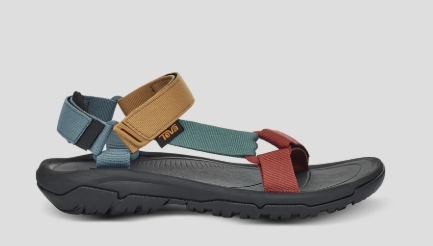
What resonated most with me was the sense of empathy embedded in their process. One designer mentioned how they often think about the feeling of slipping on Tevas after a long hike—the relief, the way the straps hug your feet without suffocating them, the joy of something uncomplicated. It wasn’t just about aesthetics or market trends; it was about people’s lives, their comfort, and their freedom to move. That awareness was visible in every rough sketch, every fabric swatch, every half-finished prototype.
Seeing the behind-the-scenes also reminded me why I keep returning to this brand. I’ve worn my own Tevas through unpredictable weather, over cobblestones, and into places I hadn’t planned to go. They’ve become less of an accessory and more of a companion. And now, after watching the designers at work, I realize that feeling is no accident. It’s the outcome of countless unseen decisions, revisions, and experiments, most of which we’ll never know about.
If you’re curious to experience that kind of design integrity firsthand, you can explore teva sandals australia. What ends up on the shelf is just the tip of the iceberg—the real story lives in the sketches, prototypes, and worktables where every detail is carefully weighed before it ever touches the ground beneath your feet.